Prey Power

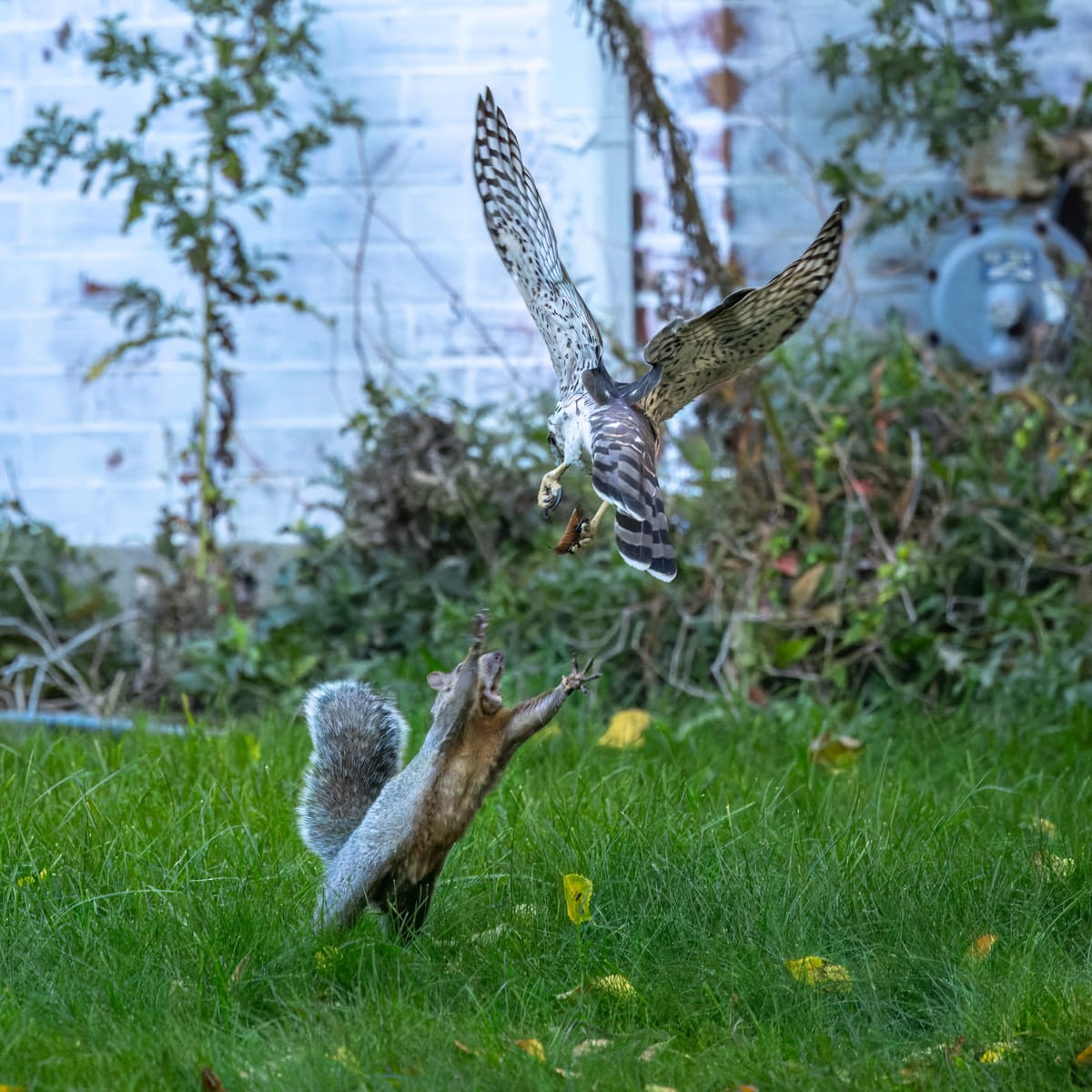
There is a widely held assumption that the power dynamic in a predator prey relationship is uni-directional. Predators are assumed to have power because they exercise it in clear and sometimes gruesome ways. I use the word gruesome for a human audience. A hawk might substitute the word practical, or efficient. A talon through the eye socket is a safe way to quickly dispatch prey without the risk of being bitten. It’s also a good way to grip your prey for a flight.
At any rate, this perspective of a power imbalance does not address the power that so called prey animals have both collectively and individually. A zebra can break the jaw of a lion with a well timed kick while being hunted, and there are a host of examples of groups of animals joining forces to protect themselves or driving away predators through collective action.
I watched that squirrel foraging in the lawn knowing full well that the coop had taken a pass at them just moments before. The squirrel was not ceding ground. They did not run. They foraged, with an eye and an ear on the ambitious yet scattered actions of the young female coop. For any smaller furry or feathered being, the presence of a clearly healthy and hungry forest raptor is a reason to panic or hide, but the squirrel was just large enough to be able to use attack as a formidable form of defense. And, they were not in the mood for games.
It took the high shutter speed and ISO to reveal what was happening in the shade of the raking morning sunlight. A scattered blur of wings and fur and the hawk and squirrel would pause and stare off into the distance, next to each other but not seeming to acknowledge the other. The hawk was clearly frustrated, trying to solve this puzzle but the squirrel offered no easy meal. Perhaps this was the first time this young hawk had encountered someone who stood their ground. They seemed perplexed.
Eventually they moved on and I lost track of them in the dappled ecologies that make up the backyards of the block. I was struck by the moment but not surprised at the squirrel’s fortitude. I’ve come across a squirrel or two in my time that made me cross the street. I’d like to say it was out of respect but no, it was fear. I don’t know them well enough for their patterns to be comforting to me. They seem to have a dark and unpredictable streak that probably serves them well in moments like the hawk encounter and, well, I wouldn’t have fared quite as well if a female coop had set her sights on me.
Power is not inherently held by predators. I think this imbalance could be similar to those perpetrated by the scientific studIes of mainly male birds. There are assumptions of value that are distorted by problematic human lenses. We have come far enough to have forgotten that we are prey species. We have decided to be predators and insulated ourselves, mostly, from the occasions when we revert to prey. Thus we ascribe power to predators and therefore ourselves. And we have forgotten the immense power and capability that we hold individually and collectively when our aims are survival and sustained well being rather than predation and consumption.
The squirrel stood up powerfully, face to feet, paws to talons, and sent a message the hawk eventually heeded. And in between attacks, they foraged, they claimed the space, they did not run. Their usual jittery vigilance replaced by a calm assertion of their right to be, as if they could tell this youngster was just passing through, fall migration and all.